BOOK / In progress
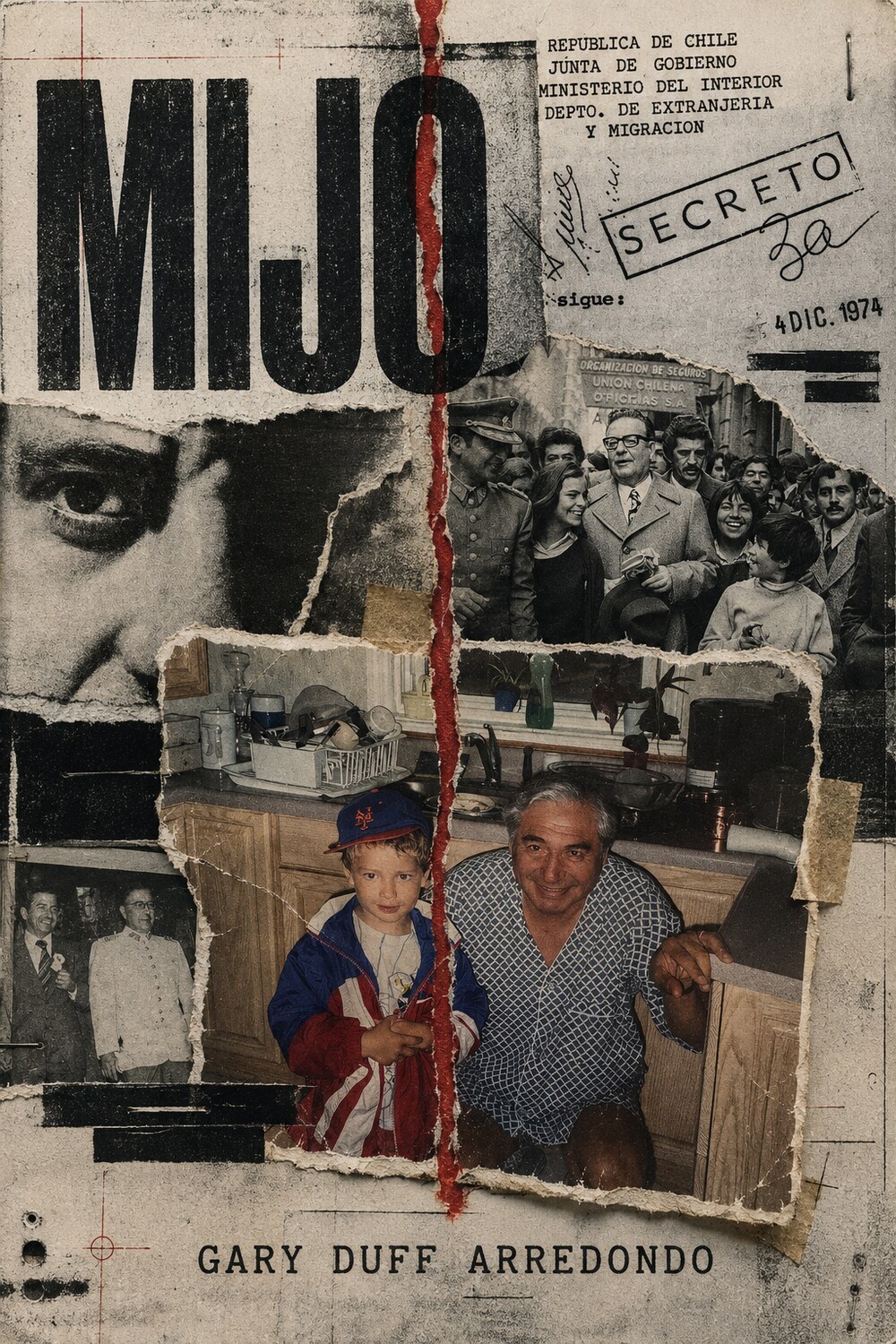
Mijo: A Genealogy of the Disappeared
ABOUT THE BOOK
Mijo is a work of hybrid narrative nonfiction about postmemory, inheritance, and a Chilean American descendant's attempt to reckon with the 1973 coup whose consequences helped bring him into being. Moving between reported narrative, journals, poetry, family history, photographs, state documents, archival research, and translation, the book follows the author backward through his own bloodline and through Chile's dictatorship, searching for what happened to the people, stories, and silences he inherited.
Gabriela Mistral is the book's patron saint—a maternal and poetic presence who calls the descendant toward a country and history he did not experience firsthand and promises, in the language of Ternura, to carry him when he cannot make the journey alone. Around her, Mijo develops a literary conversation with Theresa Hak Kyung Cha's Dictee and Don Mee Choi's DMZ Colony, works in which multilingualism, documentary evidence, translation, political violence, and the unstable archive become part of the narrative form itself.
Marianne Hirsch's theory of postmemory provides Mijo with its central intellectual problem: how does a descendant relate to a catastrophe he cannot remember but nevertheless experiences as inheritance? The investigation moves between what history documents and what it cannot: political imprisonment and disappearance; testimony and state records; family stories and family silences; the Chilean landscape and the bodies it has concealed and preserved. When the archive reaches its limit, the book does not pretend that imagination is evidence. Instead, poetry and art enter the space the record cannot occupy.
Language creates a second fracture. Mijo's English and Spanish passages are not conventional translations. They are parallel—and sometimes adversarial—narratives. English is often the language of the descendant searching for Chile; Spanish carries another inheritance. The two versions may contradict, answer, revise, or wound one another. Neither is granted authority as the original. The truth of the book accumulates in the distance between them and what together they create.
At its center is a family: grandfathers and great-uncles, longshoremen, politicians, poets and prisoners; mothers and sons; and the generations that follow.
Mijo is therefore not an attempt to remember the coup. It is the story of reckoning with something the narrator cannot remember—and discovering how profoundly it may nevertheless have remembered him.
Mijo: A Genealogy of the Disappeared was a finalist for the inaugural Kate Medina Fellowship for Literary Narrative Nonfiction at The New York Public Library.